Farm Raised Pork
Pork Raised Outdoors on Open Ground
Lobster Hill Farm offers farm-raised pork from pigs raised on pasture in Brewster,NY .
When you buy pork from Lobster Hill Farm in Brewster, NY, you are getting meat from pigs that spend their lives outside with access to dirt, grass, and room to root and forage. The pigs are fed a balanced grain ration but also eat what they find in the pasture, which includes plants, insects, and roots. This outdoor lifestyle allows the pigs to build muscle and fat naturally, and the result is pork with better marbling, richer flavor, and a firm texture that holds up well whether you are grilling, braising, or slow-roasting.
The farm raises heritage and crossbred pigs selected for their ability to thrive on pasture and produce high-quality meat. You can purchase whole, half, or quarter shares, as well as individual cuts, depending on availability. Common cuts include chops, roasts, ribs, bacon, sausage, and ground pork. All processing is done at a USDA-inspected facility, and the meat is vacuum-sealed and labeled so you know exactly what you are getting.
If you want to source pork directly from a farm in Brewster, NY where you can see how the animals are raised, contact Lobster Hill Farm to ask about current availability.
What Raising Pigs on Pasture Actually Means
At Lobster Hill Farm in Brewster, NY pigs are moved to fresh pasture sections regularly so they always have clean ground to work and new forage to explore. Shelters provide shade and protection from rain and wind, and feeders and water troughs are checked daily. The pigs root in the soil, which is a natural behavior that keeps them engaged and healthy, and they are never confined to concrete or indoor pens.
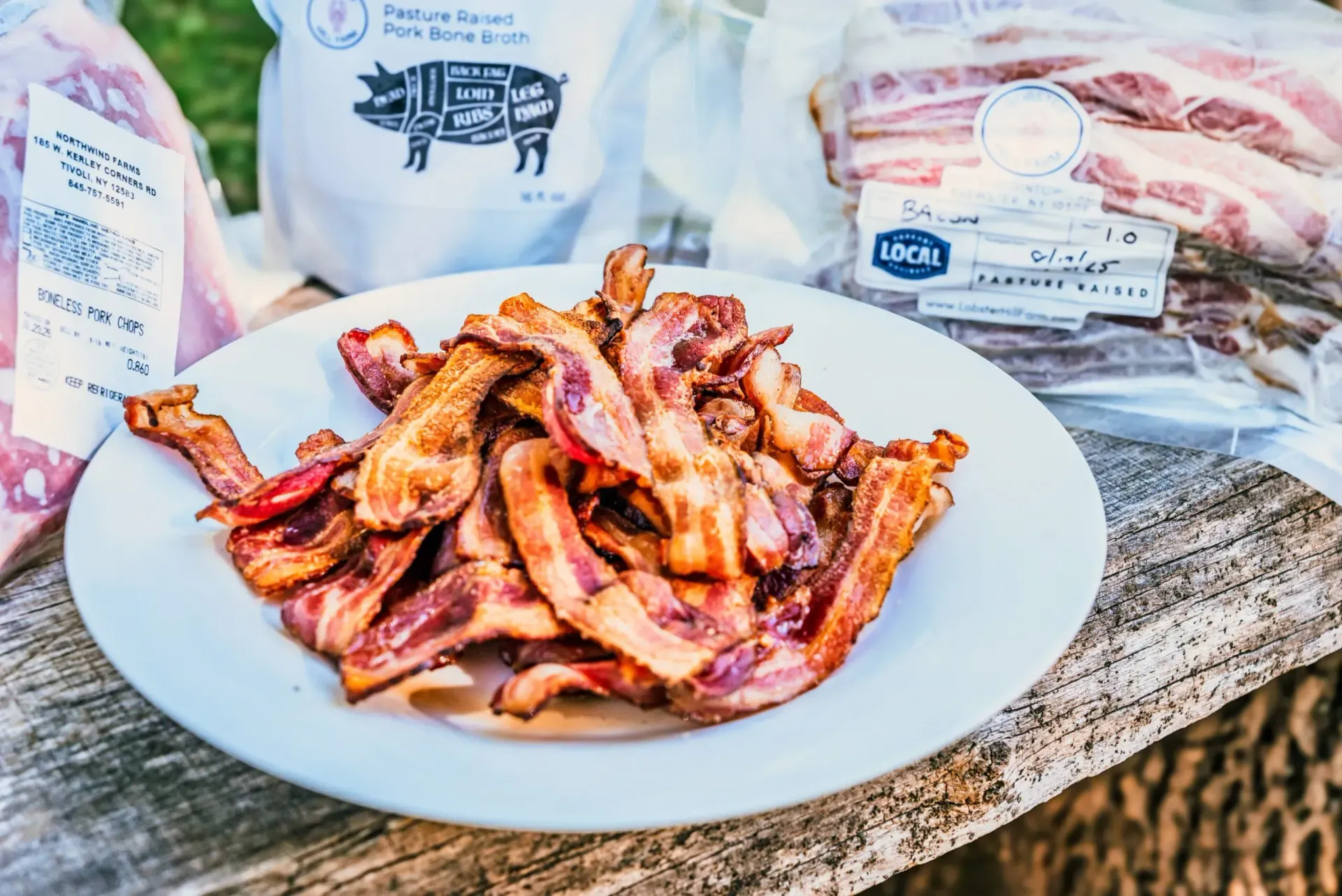
When you cook pork from pasture-raised pigs, you will notice the fat is whiter and firmer, the meat has a deeper color, and the flavor is more pronounced. Chops stay juicy even when cooked to a safe internal temperature. Roasts develop a good crust and render fat slowly. Bacon has a meatier texture and less shrinkage in the pan because the fat content is higher and more evenly distributed.
Processing is scheduled in advance and depends on when the pigs reach market weight, which is typically between 250 and 300 pounds live weight. You place your order ahead of time and choose your cuts based on a standard cut sheet or by requesting custom options. Pricing is usually set per pound of hanging weight, and you pay for processing separately. Pickup happens after the meat is aged, cut, wrapped, and frozen.
Most people want to know what to expect
Here are answers to the questions that come up most often when people are thinking about buying farm-raised pork for the first time.
What cuts are included in a half or whole pig?
You receive chops, roasts, ribs, bacon, ham, sausage, and ground pork based on your cut sheet preferences. You can also request organ meats, bones, and fat if you want them.
How much freezer space do I need for a half pig?
A half pig typically yields 70 to 90 pounds of packaged meat, which requires about 3 to 4 cubic feet of freezer space. A whole pig doubles that amount.
Why does pasture-raised pork cost more than grocery store pork?
The pigs grow slower, require more land and labor, and are processed in smaller batches at USDA facilities that charge higher per-head fees. The cost reflects the time, space, and care involved in raising animals outdoors.
When can I place an order for pork?
Orders are taken several weeks before a scheduled processing date, and spots fill up quickly. You should contact Lobster Hill Farm in Danbury as early as possible to reserve your share.
How is the pork packaged and labeled?
All meat is vacuum-sealed, labeled with the cut name and weight, and frozen. Labels also include the processing date and any custom instructions you provided on your cut sheet.
If you are interested in buying pasture-raised pork from pigs raised outdoors in Brewster, NY, reach out to Lobster Hill Farm to check availability and discuss cut options.